Time To Watch The Sandhill Cranes Come Home
September 3, 2026
September 3, 2026
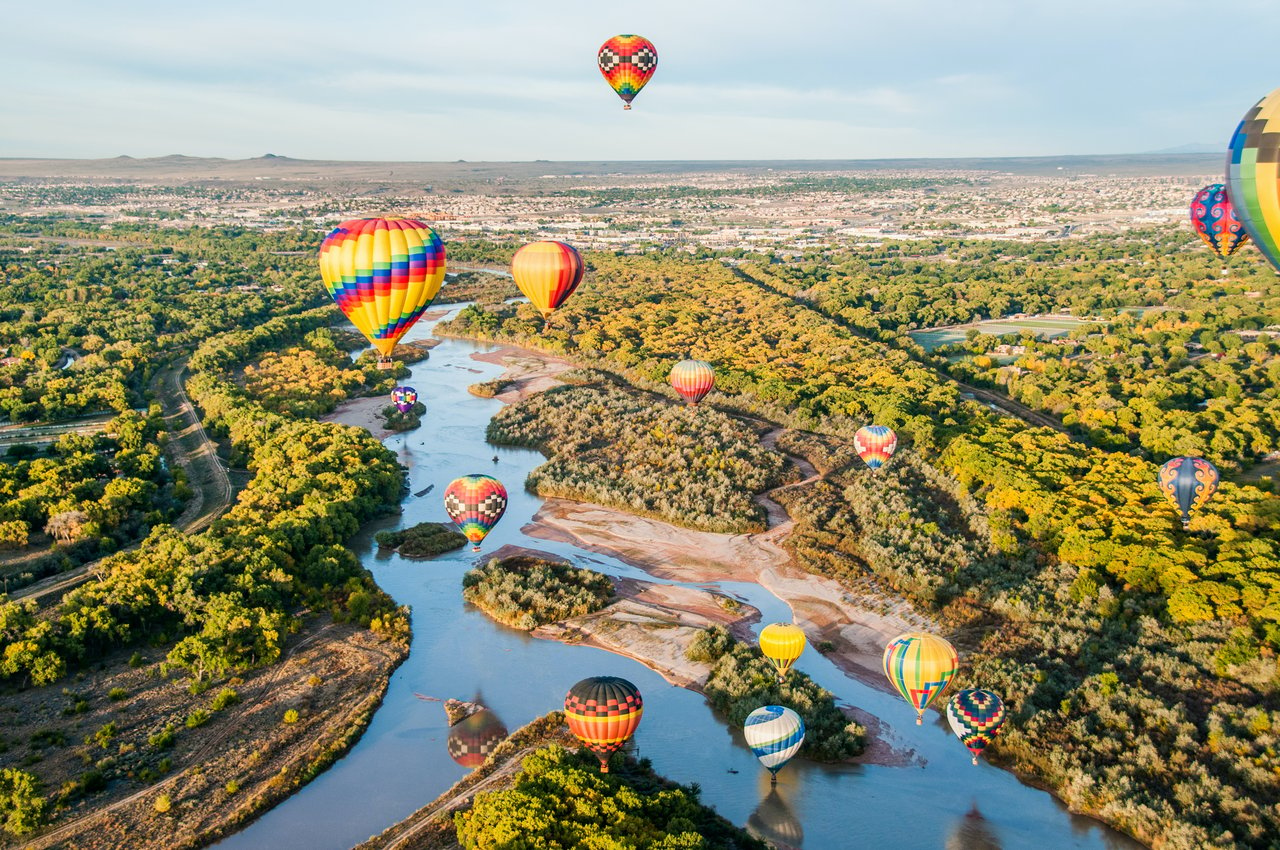
Stand at the end of Candelaria Road some October morning before the sun clears the Sandias and you will hear them before you see them. A rattling, bugling call carries for a mile across the bosque, then a wedge of birds the size of small planes drifts over the cottonwoods and drops toward the river. Most people who live near the Rio Grande Nature Center State Park already know this sound announces the return of sandhill cranes. Fewer know they can watch the whole show without ever paying to get in.
The Rio Grande Nature Center, tucked at the end of Candelaria Road west of Rio Grande Boulevard, charges a parking fee, a few dollars a car according to the park's own listings, to enter through its main visitor gate. That fee buys the indoor observation room, the gift shop, and the front-door route to the Aldo Leopold Trail. It is a fair price for what you get.
But the same trail system connects to the paved levee path that runs the length of the valley, and that connector is free. The park's own trail notes describe the after-hours route: pick up the multi-use path at the end of Candelaria and climb the levee, no ticket required. From there you are standing above the same cottonwood canopy, looking down at the same wetland, that the paying visitors reached through the front door. Cyclists and dog walkers already use this stretch daily as part of the Paseo del Bosque Trail, the 16-mile paved corridor that runs along the river's east side from Alameda Boulevard down to Rio Bravo Boulevard. Locals who fold their crane-watching into a regular bike ride or morning walk are not cutting a corner. They are using the route the trail system was built to offer.
Ask a visitor when crane season begins and they will say November, because that is when the birds arrive and when the news vans show up. Ask someone who actually watches the calendar at the Nature Center and the season starts weeks earlier, with a festival most residents drive past without noticing.
Autumn Wings runs every September at the Rio Grande Nature Center, organized by the nonprofit Friends of the Rio Grande Nature Center. It is built around birds, bats, dragonflies, and damselflies rather than cranes specifically, and it includes a BioBlitz, a single day when volunteers fan out across the park to count and log as many species as they can find. The festival exists because September is when the park's bird population is already shifting, weeks before the cranes themselves show up. Treating November as the whole season means missing the run-up that the park's own naturalists consider worth a festival.
The scale of what arrives in November is easy to state and easy to misread. Wildlife officials with the U.S. Fish and Wildlife Service put the annual migration at somewhere between 17,000 and 21,000 greater sandhill cranes moving from Colorado's San Luis Valley into the Middle Rio Grande Valley each fall. Roughly 80 percent of the entire Rocky Mountain population spends the winter in this stretch of New Mexico rather than continuing further south.
That is not a trickle of stray birds passing through. It is most of a regional population choosing this exact valley, cranes capable of covering up to 400 miles in a single day at speeds near 50 miles per hour, funneling down into a corridor that happens to run past a North Valley neighborhood most residents think of in terms of trail access and quiet mornings. The birds are not passing near the neighborhood. The neighborhood is inside the funnel.
None of this works without water and cropland, and the North Valley has been arranging both since long before anyone called it a bird sanctuary. The Los Duranes acequia madre, a three-mile irrigation ditch for the neighboring Los Duranes community, was established in 1706 to carry river water to family fields. A few years later, in 1708, a Spanish land grant created the neighboring community of Los Griegos on the same principle: divert the river, farm the valley floor, repeat every season.
That three-century-old irrigation habit is part of why the ground north of the Nature Center still functions as habitat rather than housing. The Candelaria Wetland, sometimes called the Candelaria Farm Wetland Preserve, sits just north of the visitor center on land that was reclaimed from old farm fields and replanted with close to a hundred species of native aquatic and riparian vegetation. Five surface acres of water and four acres of meadow now do for wintering waterfowl what the acequias once did for row crops: turn river water into food. It is the same agricultural logic the valley's earliest families built, pointed at a different kind of resident.
For anyone deciding where to walk this fall, the park's trail system breaks down into a few practical choices:
None of these involve real elevation gain. This is river-bottom walking, flat and shaded, which is part of why it works as a habit rather than a special occasion.
The single most useful thing the Nature Center offers isn't a festival at all. Every Saturday and Sunday, year round, volunteer naturalists lead a free guided bird walk at 8:30 a.m., meeting at the Candelaria Wetland wildlife viewing blind on the north side of the parking lot. No registration, no fee beyond the standard parking charge, and binoculars are available to borrow at the front desk for anyone who forgot their own.
That recurring walk matters more than any single crane-watching event because it turns bird season into a rhythm instead of a date on the calendar. Show up in September and a naturalist can point out the warblers and grosbeaks passing through before the cranes arrive. Show up in December and the same walk, same time, same meeting spot, puts you in front of the same wetland where cranes and other wintering waterfowl gather along the river. The festival is worth attending once. The Saturday morning walk is worth keeping.
For residents who already know these trails, this fall is a good excuse to notice the parts of the routine that get skipped: the free levee entrance most people don't realize exists, the September festival that starts the season before the birds do, and the weekend walk that turns a migration into a habit.
If you are weighing a move within the North Valley, evaluating a property near the bosque, or simply want a conversation about what a specific lot's proximity to the trail system is actually worth, D'Nette Wood knows this stretch of the valley from the water rights down to the walking paths. Let's Connect.
Stay up to date on the latest real estate trends.

Whether you’re buying your dream home or selling for the best value, I’ll be right by your side—offering clear guidance, honest advice, and hands-on support from start to finish.